SPRINKLER SYSTEM
Fire Suppression.
Sharply reducing the heat release rate of a fire and preventing its regrowth by means of direct and sufficient application of water through the fire plume to the burning fuel surface.
Automatic Sprinkler.
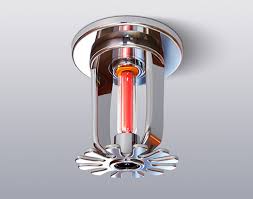 A fire suppression or control device that operates automatically when its heat-activated element is heated to its thermal rating or above, allowing water to discharge over a specified area.
Sprinkler System.
For fire protection purposes, This system includes piping, control valve, water supply from Fire water tank, Fire pump designed in accordance with fire protection engineering standards. Each sprinkler system includes a device for actuating an alarm when the system is in operation. The system is usually activated by heat from a fire and discharges water over the fire area.
System Types:
- Wet Pipe Sprinkler System
- Dry Pipe Sprinkler System
Wet Pipe Sprinkler System.
A sprinkler system employing automatic sprinklers attached to a piping system containing water and connected to a water supply so that water discharges immediately from sprinklers opened by heat from a fire.
Dry Pipe Sprinkler System.
A sprinkler system employing automatic sprinklers that are attached to a piping system containing air or nitrogen under pressure, the release of which (as from the opening of a sprinkler) permits the water pressure to open a valve known as a dry pipe valve, and the water then flows into the piping system and out the opened sprinklers.
Deluge Sprinkler System.
A sprinkler system employing open sprinklers or nozzles that are attached to a piping system that is connected to a water supply through a valve that is opened by the operation of a detection system installed in the same areas as the sprinklers or the nozzles. When this valve opens, water flows into the piping system and discharges from all sprinklers or nozzles attached thereto.
Preaction Sprinkler System.
A sprinkler system employing automatic sprinklers that are attached to a piping system that contains air that might or might not be under pressure, with a supplemental detection system installed in the same areas as the sprinklers.
FIRE CODES
In structures, building, be they land-based, offshore or even ships, the owners and operators are responsible to maintain their facilities in accordance with a design-basis that is rooted in laws, including the local building code and International fire code, which are enforced by the Authority Having Jurisdiction.
Buildings must be constructed in accordance with the version of the fire code regulated by local fire authority.
Building inspectors check on compliance of a building under construction with the fire code. Once construction is complete, a building must be maintained in accordance with the current fire code, which is enforced by the fire prevention officers of a local fire department.
The international fire code such as NFPA, FM Global will be followed globally.
The fire professionals, consultants and contractors have been adopting mostly on standards from the NFPA, FM Global with regards to the life safety design, building construction, fire protection, fire fighting, fire alarm. However UAE requires a Code of Practice that suits the local trend and concept as well as the fire fighting operational needs.
Click here to view or download UAE fire code.
Free access to NFPA, NFPA makes important safety codes and standards available for free online Click here.
Free access to FM Global.
Click here to view or download Tariff Advisory Committee (TAC) & National Building Code (NBC) in India .
FIRE PROTECTION
Fire Protection in buildings, power plant any industries factories, onshore / offshore construction is mainly achieved via the following methods.
- PASSIVE FIRE PROTCTION SYSTEM - Installation of fire walls, fire rated floor, doors, fire compartment in construction intended to limit the spread of fire.
- ACTIVE FFIRE PROTECTION SYSTEM - manual and automatic detection and suppression of fires, such as fire sprinkler systems and (fire alarm) systems.
FIRE PROTECTION SYSTEMS - (Active fire protection):
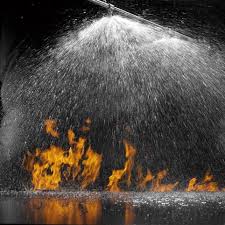 Water Based Systems
- Sprinkler System
- Standpipe System
- Water Spray System
- External Hydrant System
- Water Mist System
Gas Based Systems
- Co2 Gas Suppression System
- Clean Agent System (NOVEC, FM200, Inert Gas)
Dry Powder System
Wet Chemical System
Foam System
Fire extinguishers


